
Leave Management in Nepal: Local Labor Law Meets Self-Service
Hajir Khata Team
Share this article:
Short answer: Good leave management in Nepal configures statutory leave types (annual, sick, and others) correctly per labor law and employee tenure, then gives employees self-service visibility into their own balance and a simple way to apply — replacing a system where leave is tracked only in HR's private spreadsheet.
Why leave management is a compliance issue, not just a convenience feature
Nepali labor law sets out specific leave entitlements employers need to honor correctly, accrued per employee tenure. Getting this wrong isn't just an employee-relations problem — it's a compliance gap the same way incorrect SSF or TDS calculation would be.
What self-service actually solves
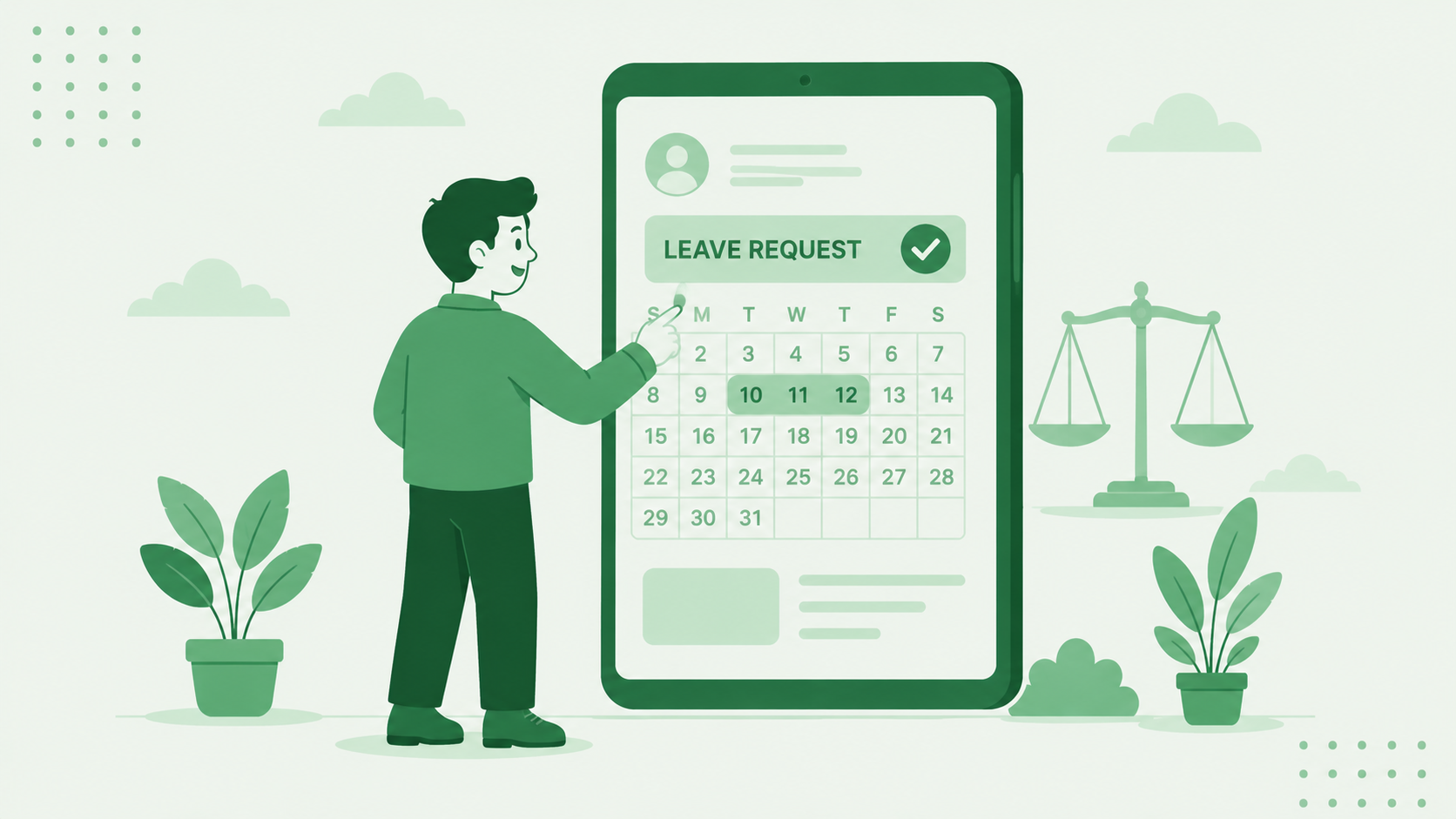
Most leave disputes start the same way: an employee believes they have more leave remaining than HR's records show, because the employee has no visibility into their own balance between requests. Giving employees a simple way to see their current balance and submit a request removes this entire category of dispute before it starts.
What to check in a leave management system
- Are statutory leave types configured correctly for Nepali labor law, not just generic “vacation” and “sick” categories?
- Does leave accrue automatically per tenure, without a manual monthly update?
- Can employees see their own balance and apply from a mobile app, not just through HR?
- Does approved leave automatically reflect in attendance and payroll, without a separate manual deduction step?
Where this connects to payroll
Leave that isn't correctly reflected in attendance shows up as a payroll error — either an employee is paid for a day they were on unpaid leave, or a deduction is applied incorrectly. Leave, attendance, and payroll working off the same data is what keeps this from becoming a recurring monthly correction.
Ready to streamline your attendance and payroll processes?
Discover how Hajir-Khata can help your business save time and reduce errors.